Commercial Real EstateLuxury ResidentialReal Estate DevelopmentStrategic Growth Advisory

Taking Ground Vision · A Mission-Driven Initiative

A 100-year vision for the church in California.

Strategic real estate counsel for churches across California — with an initial focus in the San Francisco Bay Area — and for the investors and developers building alongside them. Anchored in mission, sharpened by market, written for the long arc.

Inspired by Pastor Kris Vallotton’s 2004 prophetic encounter in the Alabaster Prayer House at Bethel Church, where he was taken one hundred years into the future and heard the Lord say, “You are to have a one-hundred-year vision…”

01/The Vision

Why a hundred years.

Most real estate decisions are written for the short term (e.g. 10 or 25 year lease). We are writing for one hundred. The reason is simple: the ability for all people to have a relationship with Jesus should exist beyond our lifetime — and beyond the lifetime of any single congregation. That requires permanent ground. Owned. Stewarded. Passed forward for future generations.

Across the Bay Area, the church is being asked to make weighty decisions in a rapidly changing market. Taking Ground Vision exists to bring strategic clarity and financial discipline to those decisions — without compromising the mission they are meant to serve.

Because land is not just an asset. It is a responsibility with a hundred-year horizon.

“Jesus came and told his disciples, ‘I have been given all authority in heaven and on earth. Therefore, go and make disciples of all the nations, baptizing them in the name of the Father and the Son and the Holy Spirit. Teach these new disciples to obey all the commands I have given you. And be sure of this: I am with you always, even to the end of the age.’”
Matthew 28:18–20
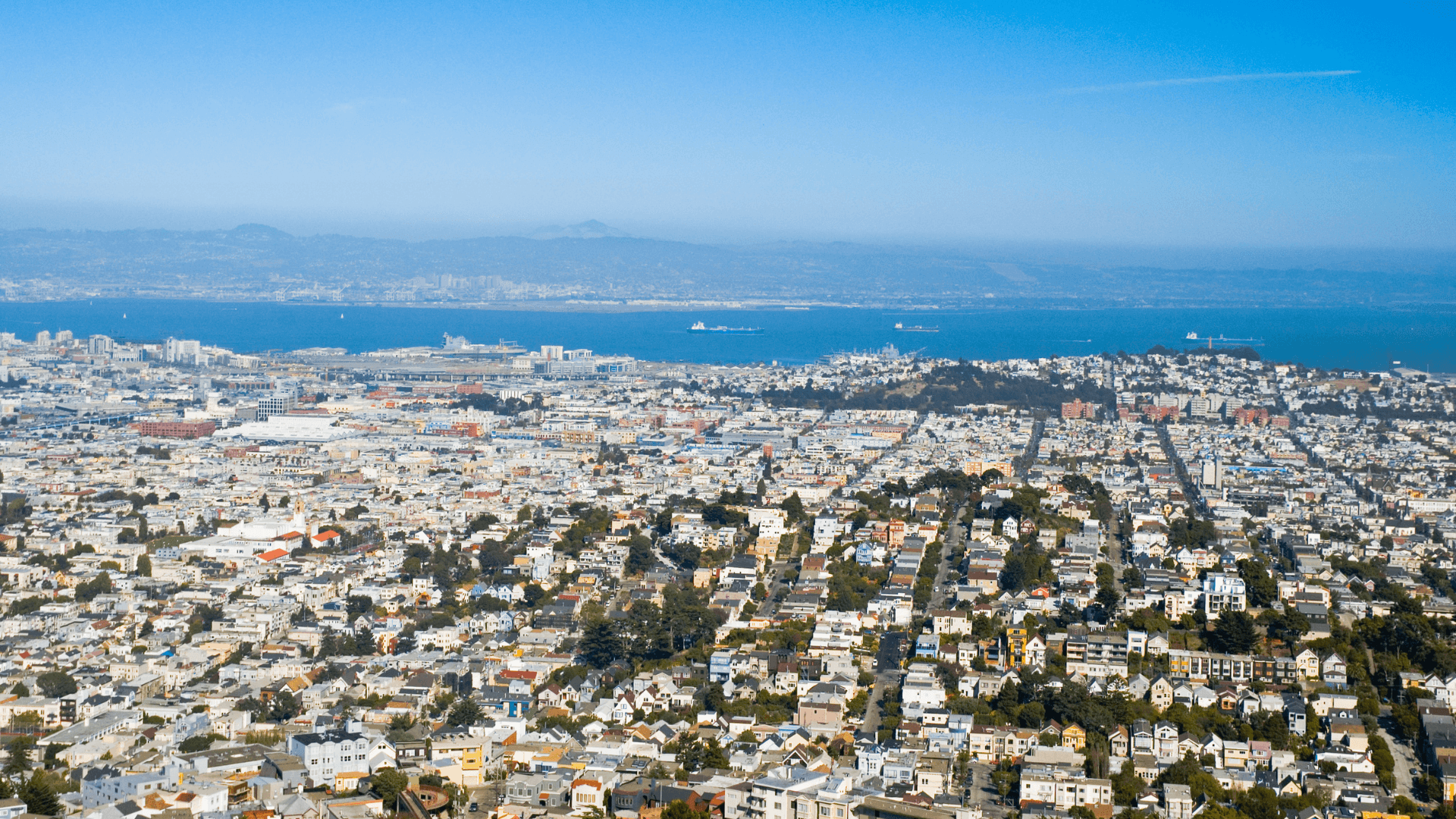
Aerial view across the San Francisco Bay Area

02/Why this place

Loneliness is part of the diagnosis. Replacing human presence with technology is the deeper problem.

The church is the original answer to both — but it cannot answer if it has nowhere to stand.

People in this fast paced environment of the Bay Area are often wired tight, smart, and often skeptical of religion. The U.S. Surgeon General has called this a national epidemic. About half of American adults report measurable loneliness, with health consequences described as “on par with smoking daily.”

Inside the Bay, the picture sharpens. More than half of San Francisco households are non-family. In several core neighborhoods — the Tenderloin, Nob Hill, SOMA, Pacific Heights — over half of residents live alone. This is not data without a story. It is the field.

“You’ll be able to basically have an always-on video chat with an AI.”

The proposed answer from Silicon Valley’s largest social platform is more technology. AI friends. AI therapists. AI companions. Writing in the San Francisco Standard, Common Sense Media’s Jim Steyer was direct:

“These ‘companions’ are not your friends. They simulate emotions but feel nothing. These apps aren’t ending loneliness. They’re commoditizing it.”

03/Why now

California needs more housing than the market can profitably build.

California’s Statewide Housing Plan calls for 2.5 million new homes by 2030 — with at least 1 million serving the needs of lower-income Californians, more than double the prior eight-year cycle. Statewide production runs at a fraction of that pace. The shortfall keeps pricing families out — and keeps reshaping every parcel around every Bay Area church.

The math of building has broken. The Terner Center at UC Berkeley finds the per-unit cost of delivering affordable housing in California rose from roughly $265K in 2000 to nearly $425K by 2016, and per-square-foot multifamily construction costs have climbed about 25% over the last decade after inflation. Stack on multi-year entitlements, rising capital costs, prevailing wage, and CEQA exposure, and margins on most market-rate projects have eroded. Projects stall. Capital sits.

The constraint has shifted. Capital is available; what is scarce is land that can actually be built on. Across the U.S., congregations are already turning underused parcels into housing — a pattern documented in Rutgers’ Faith-Based Affordable Housing inventory. Two California bills now frame who gets to build, and on whose ground.

The Warning Shot

Bill 02

SB 2

Sensitive Places

Signed
Sep 2023
9th Cir.
Sep 2024
SCOTUS
Pending

California’s SB 2 reshaped where concealed-carry permit holders can legally carry, designating houses of worship as “sensitive places” where firearms are prohibited — sweeping churches into a regulated land category. In September 2024, the Ninth Circuit blocked enforcement at places of worship, holding the restriction likely violates the Second Amendment. The case is now before the U.S. Supreme Court.

The pattern that matters

Sacramento writes a wide net first. Courts trim later. Churches without permanent ownership are exposed in the gap.

Capital is waiting. Land is the constraint. The next ten years decide who owns what gets built — and who stewards it for the next hundred.

04/What this requires

The kingdom has to own the land.

A church that rents is a church that can be moved. In the Bay Area’s market, that is not a hypothetical — it is the operating reality for most plants under ten years old. The strategic answer is not better leases. It is ownership.

Land owned by the church protects the mission across pastors, across cycles, across whatever the state capital and the courts decide next. It positions the church to be a partner — not a passenger — in the housing development now reshaping every parcel around it. The investor case and the kingdom case point in the same direction.

Permanence

The footprint outlasts the lease.

Posture

Anchor, not tenant. Partner, not passenger.

Provision

Equity becomes ministry capacity.

05/How this is built

Two models.
One outcome.

Not every church needs the same site, and not every investor wants the same project. Taking Ground Vision works in two structures, often blended into one.

01

Model One

Commercial Redevelopment

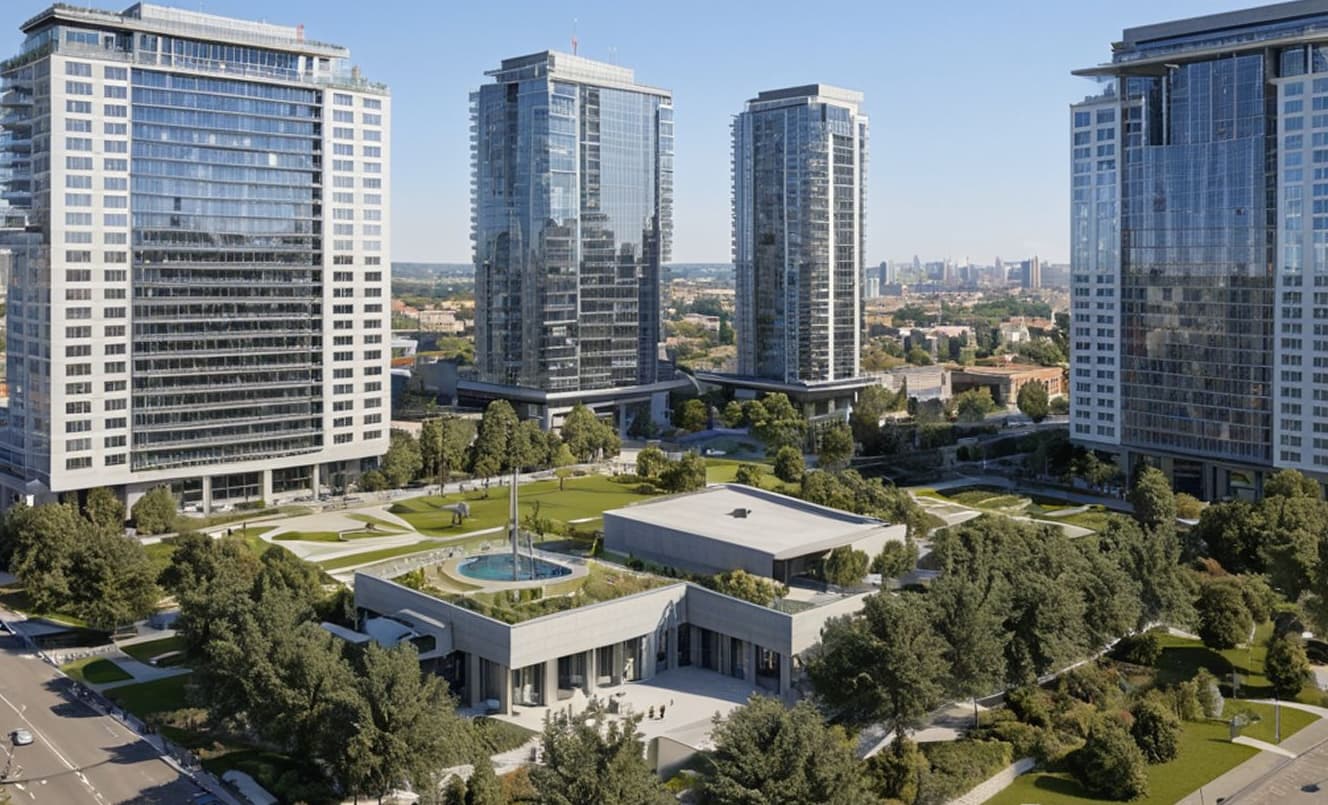
A flex or commercial property is redeveloped into a multi-use hub anchored by the church. The same square footage serves a Sunday gathering and a weekday neighborhood — and the rent revenue helps carry the mortgage.

  • Church sanctuary for worship
  • Licensed childcare facilities during the week
  • Coffee shop / cafe in the lobby
  • Co-working in the community space
  • Counseling offices and classrooms
02

Model Two

Church Embedded in Housing

Under SB 4, a residential developer partners with a church to co-locate housing and worship on the same parcel. The church anchors the site. Homes surround it. The result is a neighborhood that does not sit next to a church — it lives with one.

  • Worship building anchored on the parcel
  • Residential homes integrated into the site plan
  • Shared courtyards, café, green space
  • Developer-led, church-owned, master-planned together

Most projects combine both. The right structure depends on the parcel, the partner, and the church’s calling.

06/Where

Anchored in the Bay Area. Open across California.

The need is statewide. The strategy is local. Each city operates a different planning department with a different temperament toward SB 4, SB 2, and the developments that flow from them. Local fluency is the difference between a project that closes and a project that stalls. The work starts in the nine-county Bay Area — and extends across California from there.

Alina Siert in the Bay Area

Let's take
ground together.

Whether you lead a church, sit on staff, fill a pew, or write the checks behind the development that makes any of this possible — start a conversation here. Alina will follow up personally.